Explore what providers learn in a laser frenectomy course, including tongue-tie procedures, laser safety, infant care, and pediatric laser techniques.
If you are considering a laser frenectomy course, you have probably realized something quickly: there is a huge difference between learning about tongue-ties online and actually treating patients confidently in real life.
Watching a few surgical videos is easy. Evaluating a struggling newborn, counseling anxious parents, performing a precise release on a moving infant, and managing follow-up care? That is very different.
That is why high-quality education matters.
A strong laser frenectomy course should teach far more than simply how to use a laser. The best programs help pediatric providers understand anatomy, oral function, infant feeding, laser safety, patient selection, and interdisciplinary care. Most importantly, they help providers think critically instead of just memorizing a procedure.
With Tongue-Tied Academy, we designed our training to focus on practical, real-world skills that providers can actually use in daily clinical practice.
Why More Pediatric Providers Are Learning Laser Frenectomy
Over the last several years, awareness of tongue-ties and oral restrictions has increased dramatically. Parents are asking more questions. Lactation consultants are identifying feeding concerns earlier. Pediatricians, ENTs, dentists, speech therapists, and bodyworkers are collaborating more often.
At the same time, many providers realize they received little or no formal education on tongue-ties during training.
That gap has led many clinicians to seek continuing education through a laser dentistry course or specialized tongue-tie training for pediatricians.
And honestly, that is probably a good thing.
Tongue-tie treatment is not something providers should jump into casually after watching a weekend webinar or a few social media clips. There is a tremendous amount to learn beyond the actual procedure.
Learning the Foundations Before the Procedure
One of the most important parts of any laser frenectomy course is learning what happens before surgery.
Understanding Oral Function
A provider cannot properly treat a tongue-tie without first understanding oral function.
In our experience, newer clinicians sometimes focus too heavily on appearance. But some babies with a very obvious tongue-tie feed fairly well, while others with subtle posterior restrictions struggle tremendously.
That is why comprehensive courses spend significant time discussing:
- Tongue anatomy
- Floor-of-mouth anatomy
- Infant feeding mechanics
- Oral motor function
- Airway considerations
- Compensation patterns
Understanding function changes the way providers evaluate patients entirely.
Learning Proper Assessment
Diagnosis is often harder than the surgery itself.
A proper evaluation requires much more than simply looking under the tongue for a few seconds. Providers need to learn how to assess:
- Tongue elevation
- Tongue extension
- Lateral movement
- Suction
- Feeding coordination
- Infant compensation strategies
This is where repetition and real patient examples become incredibly valuable.
Many modern courses include extensive surgical videos and patient case studies because seeing real feeding dynamics often teaches providers more than textbook diagrams alone.
Hands-On Tongue-Tie Training
Learn laser tongue-tie treatment step by step
Learning Laser Safety and Technique
For many dentists and physicians, the procedural portion of a course is one of the most anticipated sections.
Understanding Laser Physics and Safety
A high-quality pediatric dental laser course should begin with laser fundamentals before moving into surgical technique.
Providers typically learn about:
- Laser wavelengths
- Tissue interaction
- Safety protocols
- Eye protection
- Smoke evacuation
- Tissue healing
- Laser settings
These details matter more than many people realize.
After treating thousands of tongue-tied patients, we have found that small adjustments in tension, positioning, visibility, and laser settings can make a meaningful difference during procedures and healing.
Learning Tissue Management
One of the biggest advantages of a tongue-tie release with laser is precision. But precision only comes with proper training.
Providers need to learn:
- How to visualize tissue correctly
- How to create appropriate tension
- How to maintain visibility
- How to control depth
- How to avoid incomplete releases
- How to minimize unnecessary trauma
These are practical skills that improve with guided experience and repetition.
And honestly, this is one reason hands-on education matters so much. Treating a moving infant in real life feels very different from watching a perfectly edited surgical video online.
Understanding the Full Tongue-Tie Procedure
A proper tongue-tie procedure involves much more than the release itself.
Preparing Families Before Surgery
One thing we emphasize heavily in our courses is communication.
Parents are often nervous. Some have already struggled with feeding for weeks or months. Others may have heard conflicting opinions online or from different providers.
Clinicians need to learn how to explain:
- Why treatment may help
- What the procedure involves
- What realistic outcomes look like
- What healing looks like
- What postoperative care involves
Families generally appreciate honesty and clarity much more than exaggerated promises.
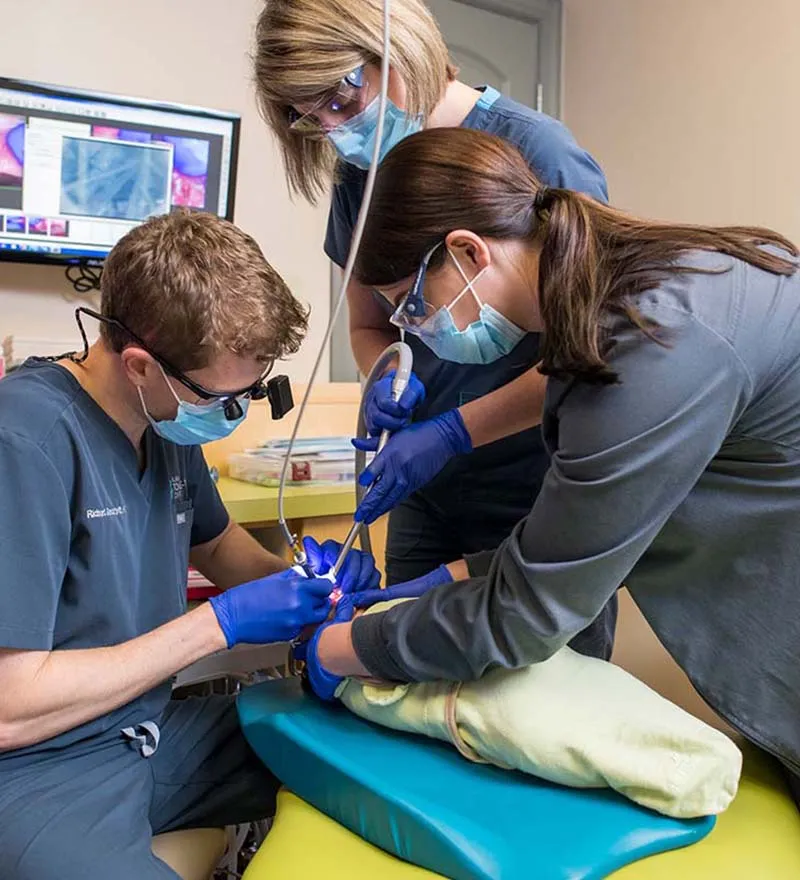
Performing Tongue-Tie Laser Surgery
Many providers specifically seek training in tongue-tie laser surgery because lasers have become increasingly common in pediatric care.
During procedural training, clinicians may learn:
- Infant positioning
- Swaddling techniques
- Visualization strategies
- Release technique
- Bleeding control
- Procedure flow
- Team communication
Watching experienced providers perform procedures step-by-step can dramatically shorten the learning curve for newer clinicians.
Managing Postoperative Care
Postoperative care is another major area where newer providers often feel uncertain.
Families frequently ask questions like:
- How should the wound look?
- Is this healing normally?
- Why is feeding temporarily worse?
- How do I soothe my baby after tongue-tie surgery?
These conversations are important.
A good course should teach providers how to guide families realistically through the healing process.
Helping Parents Soothe Babies After Surgery
One topic parents care deeply about is how to soothe baby after tongue-tie surgery.
This is an area where provider education matters tremendously because anxious parents often need reassurance and practical guidance.
In our experience, helping parents stay calm and confident after the procedure often improves the overall experience significantly.
Providers may discuss:
- Skin-to-skin contact
- Feeding immediately after the procedure
- Swaddling
- Comfort nursing
- Appropriate use of infant pain relief
- Gentle soothing techniques
- Normal healing expectations
Many families are surprised that babies often calm fairly quickly after procedures. But setting realistic expectations ahead of time remains extremely important.
Learning Through Real Patient Cases
One thing that separates strong education programs from generic online courses is exposure to real clinical situations.
Watching Different Types of Cases
Not every tongue-tie looks the same.
Some infants have classic anterior tongue-ties. Others have subtle posterior restrictions. Some older children present with feeding concerns, speech concerns, or oral-function issues rather than breastfeeding problems.
Reviewing different patient types helps providers recognize patterns they may otherwise miss.
Learning Interdisciplinary Care
Modern tongue-tie care is increasingly collaborative.
Many of the best outcomes happen when providers work alongside:
- Lactation consultants
- Speech therapists
- Occupational therapists
- Physical therapists
- Chiropractors
- Pediatricians
This team approach has become one of the most important shifts in tongue-tie care over the last decade.
That is one reason we built both the Tongue-Tied Academy Course for dentists and physicians and the Tongue-Tied Academy LITE Program for therapists and non-surgical providers. Different professionals need different types of education, but collaboration benefits everyone.
Why Hands-On Education Matters
There is no substitute for experience.
Most providers discover quickly that confidence comes from repetition, mentorship, and real patient interaction – not just watching videos.
That does not mean every provider needs to immediately perform live surgeries during training. But practical learning opportunities can make an enormous difference.
Hands-on learning may include:
- Laser handling
- Tissue simulation
- Patient positioning
- Surgical workflow
- Assistant communication
- Postoperative evaluation
These practical details are often what newer clinicians remember most after a course.
Also Read: Tongue Tie Courses vs Hands-On Training: What Professionals Must Know
Continuing Education Beyond the Initial Course
One weekend course does not create mastery.
The strongest providers continue learning long after their first laser frenectomy course through:
- Mentorship
- Study clubs
- Case reviews
- Continuing education
- Collaboration with therapists
- Ongoing surgical experience
Research in this field continues to evolve. Providers who stay engaged and continue learning are often better equipped to provide thoughtful, individualized care.
FAQs About Laser Frenectomy Courses
Q1. Who should take a laser frenectomy course?
These courses may be appropriate for pediatric dentists, general dentists, physicians, ENTs, oral surgeons, and other providers involved in treating oral restrictions.
Q2. Do providers need laser experience beforehand?
Not necessarily. Many courses teach foundational laser concepts before moving into procedural training. Many people find that Tongue-Tied Academy gives enough information on laser safety and laser use to get started treating patients.
Q3. What is taught in a pediatric dental laser course?
Courses often cover laser safety, tissue interaction, tongue-tie assessment, surgical technique, postoperative care, and interdisciplinary collaboration.
Q4. Is tongue-tie laser surgery difficult to learn?
Like any procedure, it requires training, repetition, and experience. Most providers improve significantly with guided education and mentorship.
Final Thoughts
A high-quality laser frenectomy course should teach far more than simply how to perform a release. The best programs help providers understand oral function, patient evaluation, laser technique, family communication, healing, and collaborative care.
Most importantly, strong education helps providers approach tongue-tie treatment thoughtfully and responsibly.
If you are looking for comprehensive education in tongue-tie assessment, laser procedures, and pediatric oral-function care, the Tongue-Tied Academy Course provides practical, real-world training for dentists and physicians. Therapists, lactation consultants, and allied providers can also explore the Tongue-Tied Academy LITE Program for education focused on feeding, oral function, and interdisciplinary support.
As more families seek answers to feeding and oral function concerns, thoughtful provider education has never been more important.
Grow Your Tongue-Tie Skills