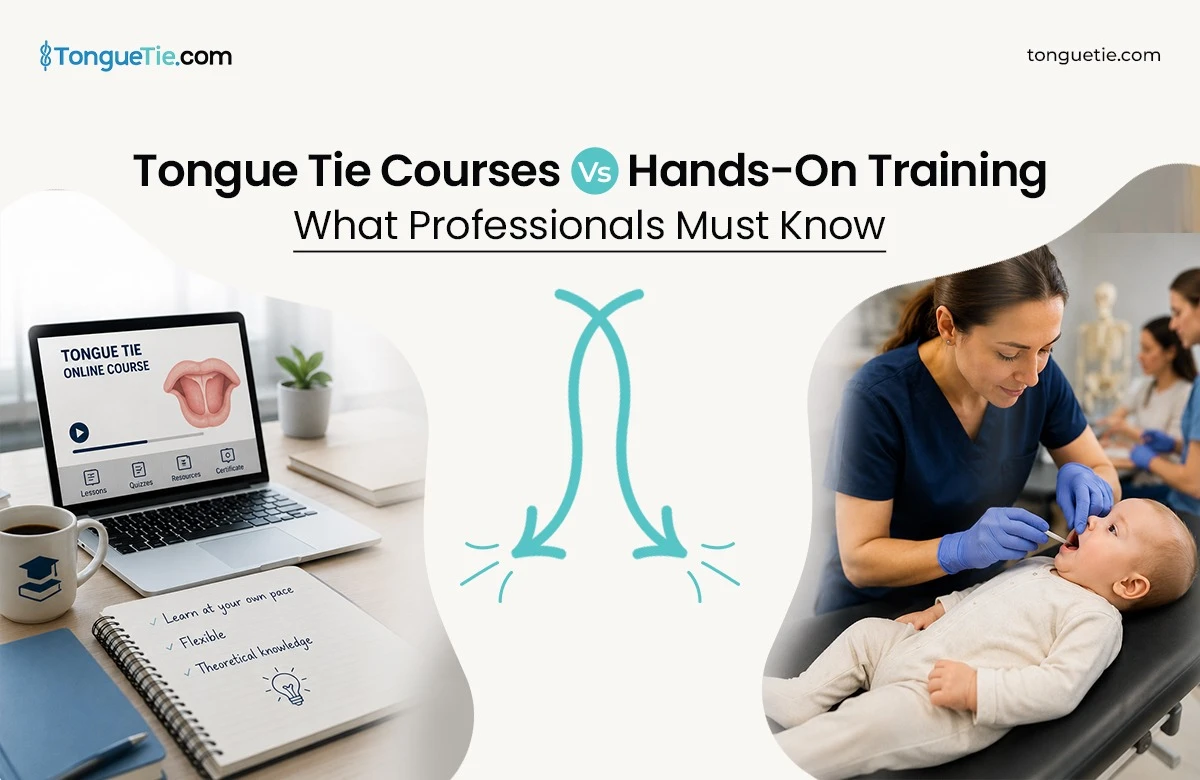
Why Education Alone Isn’t Enough – and How to Build Real Clinical Confidence
As awareness of tongue-tie and tethered oral tissues continues to grow, so does the number of tongue tie courses available to dental and medical professionals.
That’s a good thing.
But it also raises an important question:
👉 Is taking a weekend course enough to actually treat patients well?
Short answer: not by itself.
If you’re serious about providing high-level care for patients with tongue-tie, you need more than information – you need a structured approach, clinical exposure, and a clear understanding of what actually works in practice.
The Rise of Tongue Tie Education
Over the past several years, we’ve seen a surge in:
- Online tongue tie courses
- Weekend “crash courses”
- Lectures on tethered oral tissues
- Social media education
These can be valuable starting points.
They help clinicians:
- Understand anatomy
- Learn terminology
- Recognize potential symptoms
- Begin thinking differently about airway, feeding, and function
👉 But there’s a gap between knowing and doing
Why a “Weekend Course” Isn’t Enough
Many providers begin with a short course or lecture.
And while that can spark interest, it often leaves clinicians with:
- Uncertainty in diagnosis
- Hesitation in treatment decisions
- Lack of confidence with procedures
- No clear protocol for before/after care
👉 The reality is: treating tethered oral tissues is nuanced
It requires:
- Functional assessment (not just appearance)
- Understanding compensation patterns
- Precision in technique
- Awareness of healing and reattachment
- Coordination with a team
You don’t get that from a weekend alone.
What Professional Tongue Tie Training Should Include
If you’re evaluating professional tongue tie training, here’s what actually matters:
1. A Complete Clinical Framework
You need more than isolated facts.
You need a system that covers:
- Evaluation (function over appearance)
- Case selection
- Treatment planning
- Procedure technique
- Post-op care and follow-up
👉 This is the foundation we teach in Tongue-Tied Academy through our structured tongue tie training program designed for real-world clinical application.
2. Real-World Case Exposure
Seeing real patients is critical.
Because every case is different:
- Infants vs older children vs adults
- Simple vs complex restrictions
- Feeding vs airway vs speech presentations
👉 Clinical exposure builds pattern recognition
3. Hands-On Experience (The Right Kind)
There’s often confusion around what “hands-on” actually means.
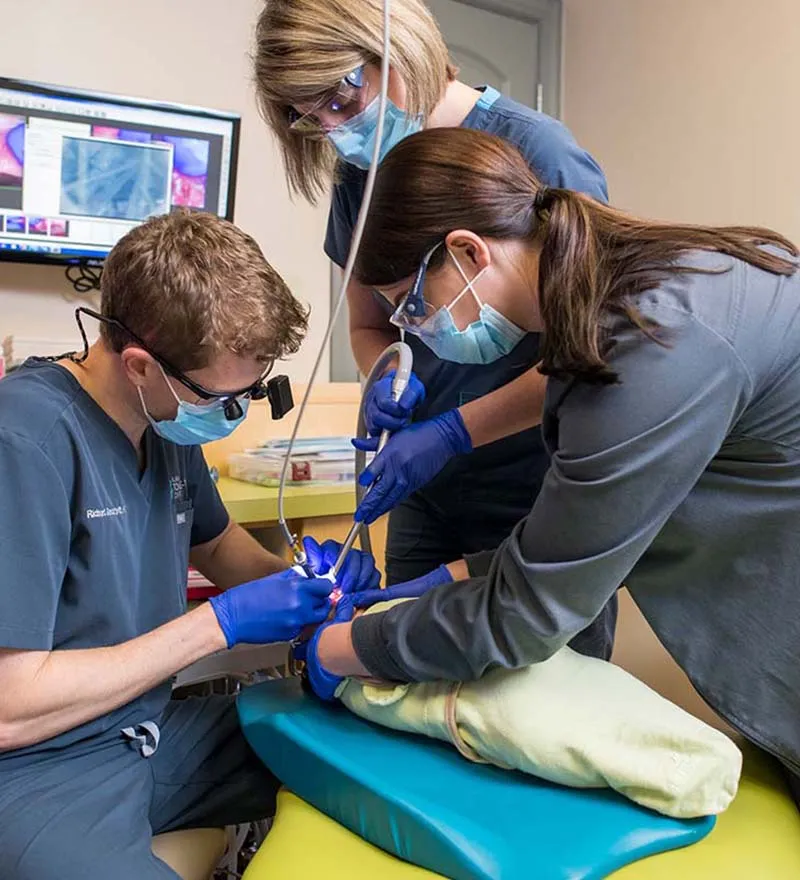
In our Advanced Live Patient Course, participants:
- Evaluate real patients
- Observe complete workflows
- Feel tissue restrictions directly
- Assist during procedures
- See how a full release is performed
👉 What you are not doing:
- Performing procedures independently during the course
This structure allows you to:
- Build confidence safely
- Understand what a complete release feels like
- See the details that aren’t visible in lectures
👉 Our hands-on tongue tie training experience is designed to help clinicians connect theory with real-world clinical observation.
4. Understanding the Full Process
One of the biggest gaps in many tethered oral tissues training programs is what happens outside the procedure.
You need to understand:
- Pre-procedure preparation
- Collaboration with therapists
- Post-op care and exercises
- Healing timelines and expectations
👉 These factors often determine success just as much as the release itself
Where Tongue-Tied Academy Fits In
Our Tongue-Tied Academy was built to bridge the gap between theory and clinical application.
It’s not just a collection of lectures.
It’s a structured system that helps you:
- Think through cases clearly
- Recognize patterns
- Build a repeatable approach
- Understand why outcomes vary
We focus heavily on:
- Function over appearance
- Real-world case examples
- Practical decision-making
For Clinicians Ready to Build Real Confidence
Start hands-on tongue tie training for clinicians
The Role of the Book Tongue-Tied
The book Tongue-Tied provides an important foundation.
It helps clinicians:
- See the broader impact of tongue-tie
- Understand patient symptoms across systems
- Recognize patterns they may have missed before
👉 It’s a great starting point – but it’s not a complete training system
Why Live Training Changes Perspective
This is where many clinicians connect everything.
During the Advanced Live Patient Course, you:
- Watch full patient flow from evaluation to treatment
- See how decisions are made in real time
- Understand what a complete release actually looks like
- Feel the difference between restricted and functional tissue
👉 These are the details that are difficult to fully grasp through online content alone
The Biggest Mistake Clinicians Make
Trying to piece everything together from:
- Multiple short courses
- Social media
- Trial and error
This often leads to:
- Inconsistent results
- Frustration
- Lack of confidence
- Partial or incomplete releases
👉 A structured, comprehensive approach is far more effective
A Better Path Forward
If you’re serious about treating tongue-tie well, think in phases:
Phase 1: Foundation
- Learn the concepts
- Read Tongue-Tied
- Understand the bigger picture
Phase 2: Structured Training
- Build a system
- Learn evaluation and decision-making
- Study real cases
Phase 3: Clinical Exposure
- Observe real patients
- Feel restrictions
- Understand workflow and execution
Final Thought
There’s never been more information available about tongue-tie.
But information alone doesn’t create confident clinicians.
👉 Great outcomes come from combining knowledge with real clinical understanding
If your goal is to treat patients well – not just understand the topic – your training path matters.
Take the Next Step
If you’re ready to build a clear, structured approach:
👉 Start with Tongue-Tied Academy
https://tonguetie.com/course
👉 Then experience real cases in the Advanced Live Patient Course
Because the goal isn’t just to learn about tongue-tie
👉 It’s to treat it well.
Struggling With Clinical Confidence in Tongue Tie Cases?