If you ask ten people why one tongue-tie procedure is successful and another isn’t, you’ll probably get ten different answers.
Some will tell you it’s the laser. Others will say it’s the surgical technique. Some believe the answer lies in therapy, bodywork, or aftercare. Still others think the diagnosis itself is the most important step.
After treating thousands of patients over more than a decade, I think they’re all partly right.
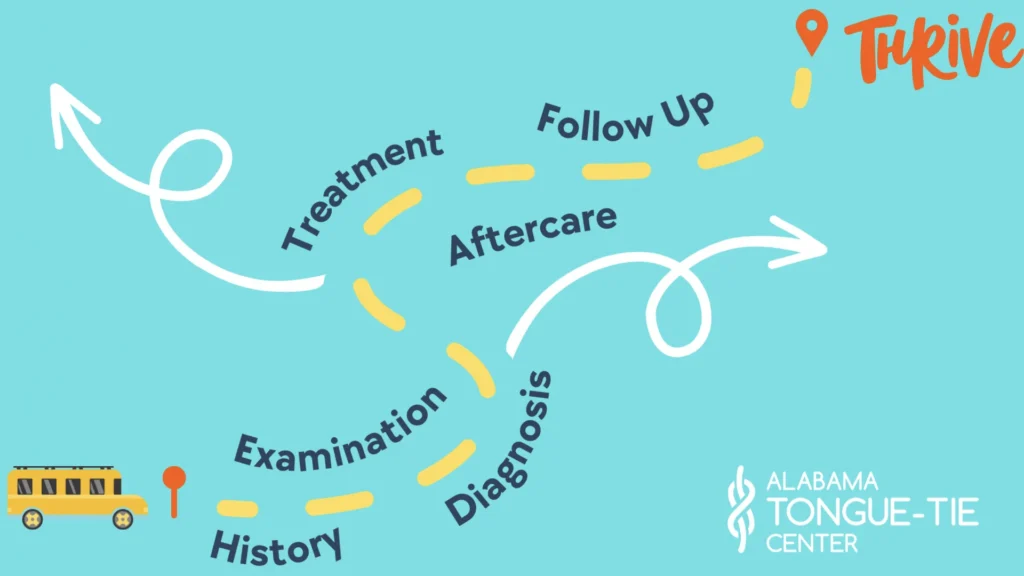
One of the biggest lessons I’ve learned is that excellent outcomes rarely depend on one thing. Instead, they come from getting the entire process right. In my experience, when the right patient is selected, the diagnosis is accurate, the release is complete, appropriate aftercare is provided, and the patient has the support of a multidisciplinary team when needed, the overwhelming majority of patients experience meaningful improvement.
People occasionally ask me whether tongue-tie treatment really works.
My answer is yes. When it’s done well, it works remarkably well.
Notice I didn’t say, “When the procedure is done well.” The procedure is certainly important, but it’s only one step in a much larger process. I’ve become convinced that focusing too much attention on the laser causes us to overlook everything that happens before and after it.
That’s probably not what many people expect me to say.
After all, I teach laser frenectomies. You might assume I’d spend most of my time talking about surgical technique. Most people when they come to visit us for the course, or during a lecture want to focus on the procedure. The reality is just the opposite. While I certainly want providers to perform a safe, complete release, I spend far more time teaching how to decide whether a patient needs treatment in the first place. I also spend a great deal of time discussing functional assessment, aftercare, follow-up, and working with other healthcare professionals. Those topics don’t generate as many headlines, but I believe they’re just as important as the procedure itself.
In fact, I sometimes tell providers that owning a laser doesn’t make someone successful in treating tongue-ties any more than owning a scalpel makes someone a surgeon.
The instrument does matter… but the process matters far more.
Over the years, I’ve found myself returning to the same seven principles again and again. Whether I’m evaluating a newborn with breastfeeding difficulties, a toddler with feeding and sleep challenges, or an older child with speech concerns, these are the ideas that consistently lead to the best outcomes.
1. Start With the Right Patient
This may be the most important step of all.
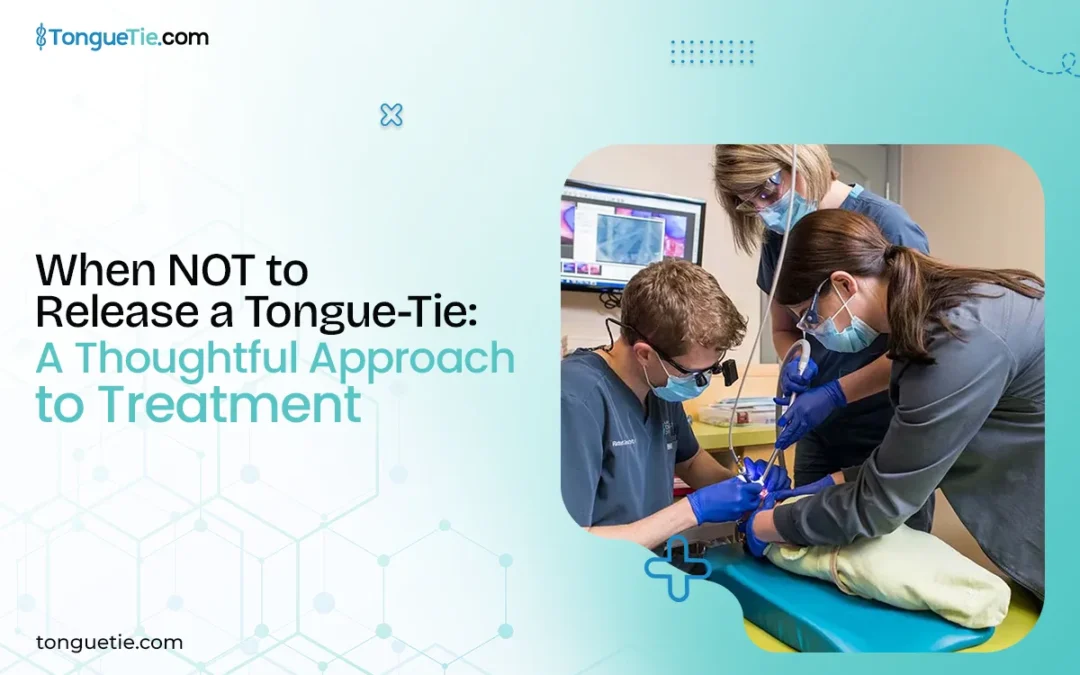
One of the misconceptions surrounding tongue-ties is that every restrictive frenulum should be released. I don’t believe that’s true, and I’ve written about that in When NOT to Release a Tongue-Tie.
Every patient has a frenulum. (Well, almost…)
Not every patient has a tongue-tie that requires treatment.
More importantly, not every symptom is caused by a tongue-tie. We don’t go looking for a tongue-tie behind every bush (rather, symptom).
That may seem obvious, but it’s surprisingly easy to forget when a family has been searching for answers for weeks or months. Parents naturally want to know what’s wrong, and as providers, we naturally want to help. The temptation is to focus on the anatomy because it’s something we can see. The challenge is that anatomy alone doesn’t tell us whether the frenulum is actually contributing to the patient’s symptoms.
Before I ever recommend treatment, I want to know why the patient is in my office. Is breastfeeding painful? Is the baby transferring milk efficiently? Are feedings taking an hour? Is there clicking, excessive air swallowing, poor weight gain, or persistent frustration despite working with a lactation consultant? Is this an infant who has already seen multiple providers without improvement? The history often tells me as much as the examination itself.
I’ve also become convinced that proper case selection is one of the reasons outcomes differ so dramatically from one practice to another. If we recommend treatment for patients who are unlikely to benefit, our success rate will naturally suffer. On the other hand, when we carefully evaluate each patient, understand the functional limitations, and make thoughtful recommendations, outcomes improve dramatically. I really only want to release a child if I think there is a 90% chance or greater of this procedure helping that family.
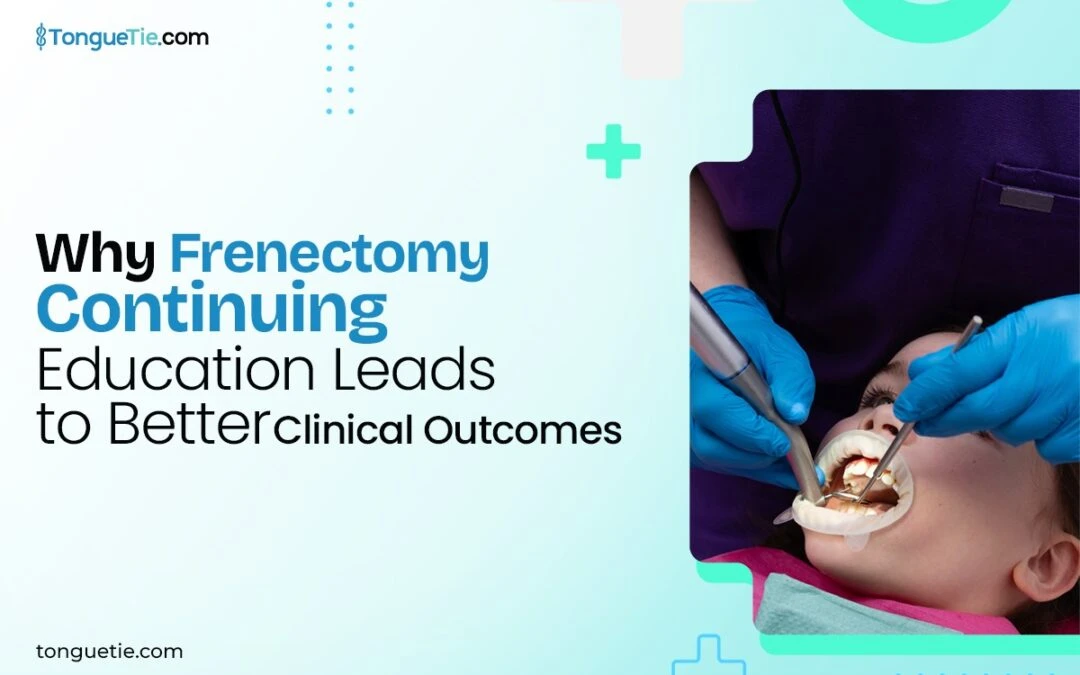
One reason I created Tongue-Tied Academy was to teach this decision-making process. Most medical and dental schools provide little (or no) education on tongue-ties, and even less on comprehensive functional assessment. The course certainly teaches laser technique, but that’s only one part of it. My goal is to help providers become confident in evaluating patients, making the correct diagnosis, and deciding when treatment is, and just as importantly, isn’t appropriate. Providers can learn more about Tongue-Tied Academy if you haven’t already, to help you and help your patients on their journey.
Parents occasionally find these provider articles as well. If that’s why you’re here, don’t worry if some of this feels technical. The most important message is this: a treatment recommendation should never be based on appearance alone. Most often, this happens with significant tongue-tie symptoms and a minimal string under the tongue, and parents are told there is nothing wrong. A careful evaluation looks at your baby or child’s history, feeding function, symptoms, examination, and the entire clinical picture before anyone recommends a procedure. If you’ve been searching for answers and would like a comprehensive evaluation, you’re welcome to send us a message through our contact page. I’d be happy to help determine whether a tongue-tie, or something else entirely, is contributing to your child’s symptoms. You’re not too far away, as we routinely have patients from across the USA and around the world.
For Clinicians Who Want Better Patient Outcomes
Master the Complete Tongue-Tie Treatment Process – From Diagnosis to Aftercare
2. Take a Thorough History Before You Ever Pick Up an Instrument
One of the biggest mistakes I see is starting the evaluation under the tongue instead of evaluating the situation and what happened in the past.
Before I examine a baby’s mouth, I want to hear mom’s story.
Parents have often been living with these challenges for weeks or even months. They’ve worked with lactation consultants, changed nursing positions, tried different bottles, pumped around the clock (you can only triple-feed for so long before going crazy!), and sometimes visited several healthcare providers before they arrive at my office. By that point, they’re usually frustrated and exhausted, wondering why no one has been able to give them a clear answer.
One of the things I’ve learned is that parents are remarkably good observers. They may not know the difference between an anterior and posterior tongue-tie, but they know their baby. They’ll tell me breastfeeding hurts every single time. They’ll describe clicking throughout a feeding, milk leaking from the corners of the mouth, excessive gas, prolonged nursing sessions, or a baby who never seems satisfied. Sometimes they’ll simply say, “I just know something isn’t right.”
I pay close attention when I hear that.
Those observations don’t make the diagnosis, but they often point me in the right direction. In many cases, the history is already telling me what I need to investigate during the examination.
3. Diagnose Function, Not Anatomy
If I had to summarize my philosophy in one sentence, it would probably be this:
Symptoms and function are more important than appearance.
Every baby has a frenulum.
The question isn’t whether tissue exists. The question is whether that tissue is preventing the tongue from functioning normally.
That’s a much more difficult question to answer.
Over the years, I’ve evaluated babies with very obvious frenula who fed beautifully and didn’t need treatment. I’ve also evaluated babies (every day…) whose tongues looked relatively normal until we assessed how they actually functioned during feeding. Those babies often struggled with poor milk transfer, painful breastfeeding, excessive air swallowing, or inefficient sucking despite appearing “normal” during a quick visual examination.
This is one reason posterior tongue-ties remain so controversial. They’re frequently described as “hidden,” but I don’t think that’s the best word. In many cases, they’re simply overlooked because the evaluation focuses primarily on anatomy rather than function. Most patients (probably two-thirds) who come to see us have a less obvious restriction, or “posterior” tongue-tie.
A careful examination should answer questions like these:
-
Can the tongue elevate appropriately?
-
Can it extend when needed?
-
Can it maintain suction?
-
Is the tongue compensating?
-
Does the examination explain the symptoms the parents are describing?
If those pieces don’t fit together, I keep looking. I don’t believe in forcing every patient into a tongue-tie diagnosis simply because a frenulum is present.
One of the reasons I enjoy teaching is because I remember how difficult it was to find practical education on this topic early in my career. There was really not much available. Most medical and dental schools provide little (or no) education on tongue-ties, particularly functional assessment in infants. That’s exactly why Tongue-Tied Academy spends so much time on evaluation before discussing treatment. My goal isn’t simply to teach providers how to perform a laser procedure. It’s to help them develop the clinical judgment needed to decide when treatment is truly appropriate.
More Than a Procedure
Sometimes people ask whether tongue-tie treatment “works.”
I think that’s actually the wrong question.
The better question is whether the entire treatment process works.
In my experience, when the right patient is selected, the history is carefully reviewed, the examination is thorough, the diagnosis is accurate, the release is complete, appropriate aftercare is provided, and the patient receives support from the right multidisciplinary team, the results are often remarkable. It probably works more than 90% of the time. That’s why I continue to believe so strongly in tongue-tie treatment. It’s not because a laser is magical. It’s because a thoughtful, comprehensive approach consistently helps patients.
Unfortunately, if one or more of those pieces is missing, outcomes may not be nearly as predictable. That’s one reason different providers sometimes report very different experiences. They’re not always performing the same evaluation, recommending treatment for the same patients, or following the same process afterward.
That’s also why some studies on tongue-tie, or even procedures performed by other providers, seem not to “work.” It’s not about just clipping a string, with no follow-up, no aftercare stretches, and minimal history and examination. Maybe just a tongue depressor to lift the tongue, and a few questions like “Does it hurt?” and “Is the baby gaining weight?”
Parents reading this article should know that this is exactly why comprehensive evaluations matter. A tongue-tie release shouldn’t be recommended because someone notices a frenulum. It should be recommended because the history, examination, and functional findings all point in the same direction. If you’ve been searching for answers and would like a thorough evaluation, you’re always welcome to send us a message or visit our practice’s website, TongueTieAL.com. I’d be honored to help determine whether a tongue-tie, or something else entirely, is contributing to your child’s symptoms.
4. Perform a Complete, Thoughtful Release
Once the decision has been made to proceed with treatment, the procedure itself obviously matters.
I think most providers would agree with that. Where opinions sometimes differ is what constitutes a complete release. A “snip” or a “clip” is a partial procedure and leaves restrictive tissue behind.
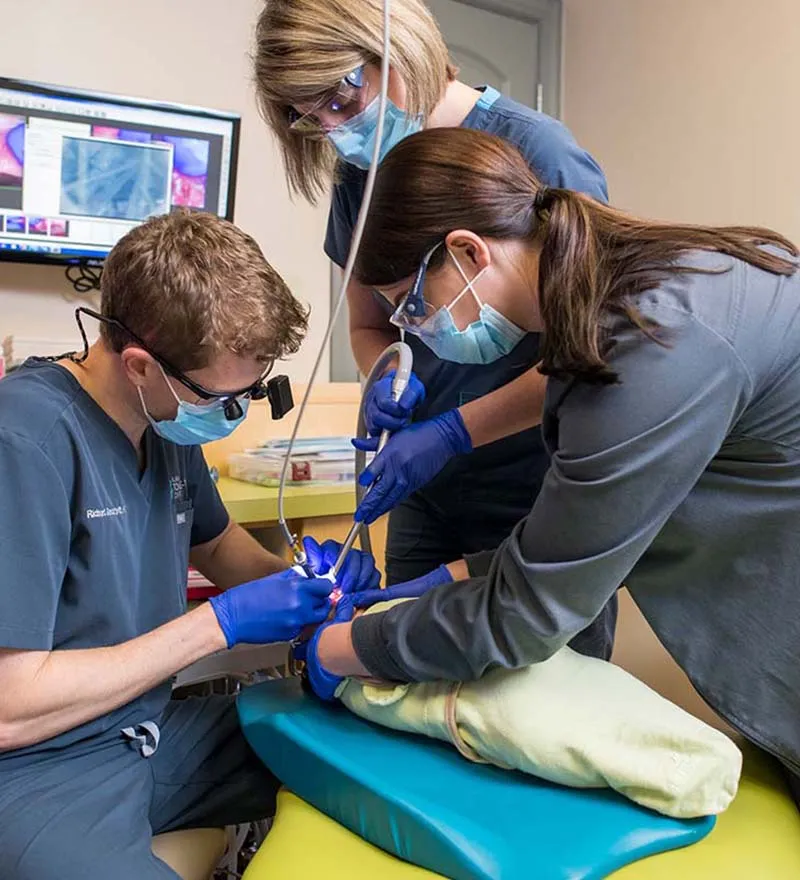
I’m not interested in simply making the tongue look different. My goal is to improve function. That requires understanding the anatomy, recognizing where restrictions remain, and performing the procedure carefully and deliberately. Every patient is a little different, and every release should be individualized. That’s why I use magnification and a headlamp to ensure I have great visibility, and the CO2 laser provides a mostly bloodless field, allowing us to pick out individual restrictive fascial fibers to release.
Parents occasionally ask whether the laser is the reason patients improve so quickly. I certainly believe the CO2 laser offers many advantages, but I don’t think the laser alone explains great outcomes. A beautifully performed procedure on the wrong patient still won’t produce the result anyone is hoping for. Likewise, an incomplete release may leave significant restrictions behind.
Technique matters. Experience matters. Attention to detail matters. We always try to remove all the restrictive fibers and give the tongue the most elevation possible, so we give the tongue and the child the best possible chance of improvement.
5. Don’t Underestimate Aftercare and Follow-up
If the procedure is only one step in the process, healing is another.
One of the things I’ve become more convinced of over the years is that aftercare should never be treated as an afterthought. Families need to know what to expect during healing, how to care for the surgical site, and when to return for follow-up. They also need to understand that every child heals a little differently.
Also Read This: What Is Posterior Tongue Tie? A Simple Guide for Parents
Some babies nurse better immediately. Others improve gradually over the following days or weeks. Neither situation surprises me. Healing is a process, not an event.
I also believe follow-up visits are incredibly valuable. They allow me to evaluate healing, answer parents’ questions, and identify any concerns before they become larger problems. Just as importantly, they give me the opportunity to celebrate successes with families who have often struggled for a long time before finally finding answers.
6. Remember That the Laser Isn’t the Entire Treatment
If there’s one idea I hope readers remember from this article, it’s this:
The procedure isn’t the treatment. Better function is the treatment.
The process is how you get to where you’re going. A laser frenectomy creates the opportunity for improved tongue mobility. What happens afterward often determines how much that new mobility translates into better feeding, improved oral function, or other meaningful changes.
That’s why I believe so strongly in a multidisciplinary approach.
Depending on the patient, that team may include an IBCLC, speech-language pathologist, occupational therapist, physical therapist, chiropractor experienced with infants, pediatrician, ENT, orthodontist, or another healthcare professional. Not every patient needs every member of that team, but I’ve found that many patients benefit when providers communicate well and work toward the same goal.
Sometimes bodywork before treatment makes a noticeable difference. Sometimes additional feeding therapy afterward helps a baby learn to use a tongue that suddenly has much greater freedom of movement. Every patient is unique, and I think our treatment plans should reflect that. Also, the younger the baby or child is, the quicker we see results due to fewer bad habits.
If you’re a therapist reading this article, Tongue-Tied Academy LITE was created specifically for professionals like you. My hope is to strengthen collaboration among the entire healthcare team because I believe our patients benefit when we’re all speaking the same language and working toward the same objectives. Or if you would like to refer patients to us, you can learn more at our practice’s referral page.
7. Never Stop Learning
One of the reasons I enjoy teaching is because I’m still learning myself. Every day.
After treating thousands of patients, I certainly have more knowledge and confidence than I did when I started, but I also have more humility. We don’t know what we don’t know. Every year I refine my examination, adjust my recommendations, and continue learning from colleagues around the world. That’s one of the things I enjoy most about this field. We’re continually asking better questions and improving the way we care for patients.
I don’t think anyone ever truly masters tongue-ties. I think we simply keep getting better.
That’s one of the reasons I founded Tongue-Tied Academy. I wanted to create the course I wish had existed when I first began treating tongue-ties. Rather than focusing only on the procedure, the curriculum walks through the complete process, from patient selection and functional assessment to laser technique, aftercare, follow-up, and multidisciplinary care with dozens of real patient cases along the way. If you’re a dentist or physician looking for practical, experience-based continuing education, I’d love to have you join us for the course.
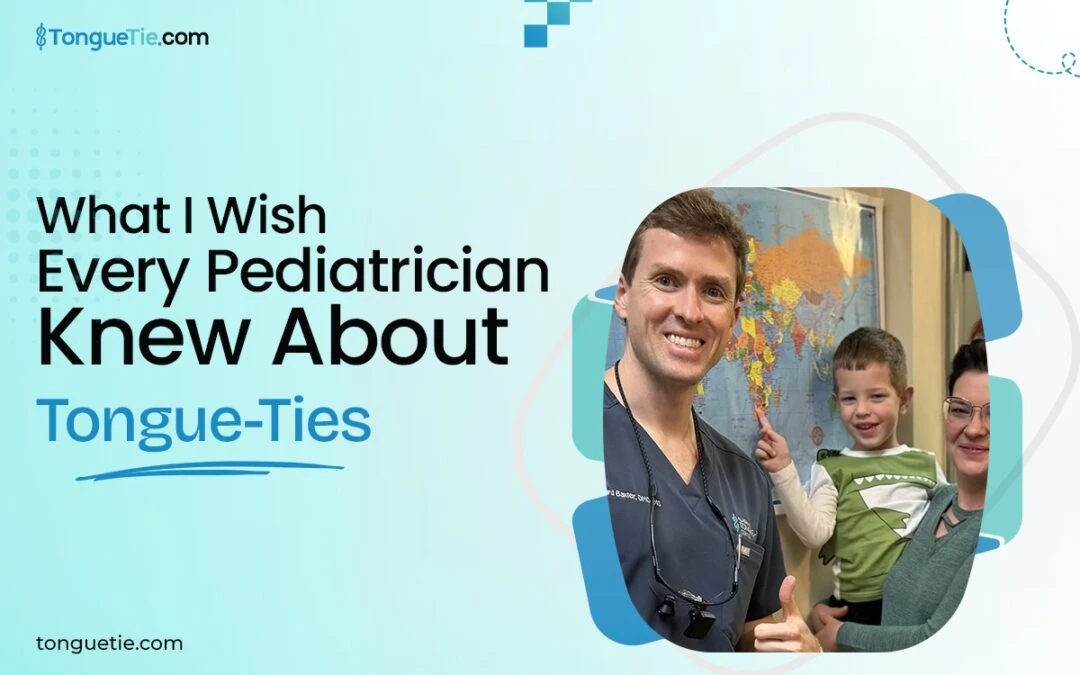
Read Also: What I Wish Every Pediatrician Knew About Tongue-Ties
If you’re a parent who somehow found your way to this provider-focused article, I hope you’ve taken away one important message: successful tongue-tie treatment isn’t about finding more tongue-ties. It’s about making the right diagnosis, selecting the right patients, performing the procedure well, and supporting families throughout the entire process. When those pieces come together, I’ve found that the results are often life-changing for both children and their parents.
If you’ve been searching for answers or have received conflicting opinions and aren’t sure what to believe, I’d encourage you to send us a message or call our office at 205-419-4333. We’d be honored to help determine whether a tongue-tie, or something else entirely, may be contributing to your child’s symptoms.
FAQ’s
Q1. Does every tongue-tie need to be released?
Ans. No. Treatment decisions should always be individualized. Some patients benefit greatly from a frenectomy, while others may improve with therapy, observation, or treatment of another underlying issue.
Q3. Why do some providers report better outcomes than others?
Ans. In my opinion, outcomes depend on much more than the procedure itself. Careful patient selection, a thorough history, functional assessment, proper diagnosis, complete treatment, appropriate aftercare, follow-up, and collaboration with the right healthcare team all influence success. We try to maximize these areas to see the best results for our patients.
Q4. Do you believe tongue-tie treatment works?
Ans. Yes. After treating thousands of patients over more than a decade, I continue to believe that properly selected patients often experience meaningful improvement when the entire treatment process is done well. That’s a very different statement from saying every patient needs treatment or that every symptom is caused by a tongue-tie. It’s not a religion, and belief doesn’t even factor into it when we see the results and hear the success stories daily. “Faith is the assurance of things hoped for, the conviction of things not seen.” Hebrews 11:1
Q4. Why do you emphasize a multidisciplinary approach?
Ans. Because no single provider sees the whole picture. Collaboration often leads to better diagnoses, better treatment plans, and better long-term outcomes.
Continue Reading
You may also enjoy these articles:
-
When NOT to Release a Tongue-Tie: A Thoughtful Approach to Treatment
-
Preventing Reattachment After a Tongue-Tie Release: What Parents Need to Know About Stretches
- 3 Ways to Tell If A Child Has a Lip-Tie
Looking back over thousands of patients, I don’t think excellent outcomes come from doing one thing exceptionally well. They come from doing dozens of small things consistently well. That’s the philosophy I’ve tried to build my practice around, and it’s the same philosophy I hope to pass along through my teaching and through our book, Tongue-Tied. When we slow down, think critically, and care for the whole patient rather than focusing on a single procedure, everyone benefits.
Ready to Deliver Better Tongue-Tie Outcomes?