Wondering what is included in a tongue-tie training course? Learn about tongue-tie assessment, laser releases, anatomy, breastfeeding support, and more.
If you have been researching a tongue-tie training course, you have probably noticed there are a lot of options out there now. Some focus heavily on procedures. Others are geared more toward feeding, therapy, or oral function. And honestly, not all courses teach the same things.
A good course should do much more than simply show providers how to release a tongue-tie. The best training programs help clinicians understand why patients struggle, how to evaluate function properly, and when treatment may or may not be appropriate. Whether you work with tongue-tied infants, children with feeding challenges, or older kids with speech issues in children, strong education matters.
At Tongue-Tied Academy, our goal has always been to teach providers practical, real-world concepts that can immediately improve patient care — not just theory or isolated techniques.
Why Tongue-Tie Training Has Become So Important
Ten or fifteen years ago, many providers received little or no education about tongue-ties during formal training. Today, parents are asking more questions, awareness has grown, and healthcare professionals are seeing more infants and children struggling with feeding, oral function, speech, and airway concerns.
That increased awareness is a good thing. But it also means providers need high-quality education.
Families often come in asking questions like:
- Is tongue-tie release necessary?
- What are the symptoms of tongue-tied babies?
- What should we expect after tongue-tie release?
- What are the pros and cons of tongue-tie release?
- How is posterior tongue-tie treated?
A provider who has only watched a few online videos may not feel prepared to answer those questions confidently. In our experience, that uncertainty is one of the biggest reasons clinicians seek continuing education in this field.
Learning Tongue-Tie Anatomy and Oral Function
Most comprehensive courses begin with the foundation: anatomy and function.
Understanding More Than Just Appearance
One of the biggest mistakes newer providers make is focusing only on what a tongue-tie looks like instead of how it functions.
Some babies have a very obvious anterior tongue-tie but feed reasonably well. Others have a subtle posterior restriction and struggle tremendously with latch, milk transfer, bottle-feeding, or overall oral function.
That is why understanding tongue-tie anatomy matters so much.
Courses often review:
- Tongue musculature
- Floor-of-mouth anatomy
- Fascial restrictions
- Oral motor function
- Infant feeding mechanics
- Airway considerations
This helps providers start seeing the “big picture” instead of simply looking for a membrane under the tongue.
Recognizing Common Symptoms
Most programs also spend time discussing the many possible symptoms of tongue-tied infants and children.
Common infant symptoms may include:
- Clicking during feeds
- Difficulty latching
- Poor weight gain
- Maternal nursing pain
- Fatigue while feeding
- Milk leaking from the mouth
- Gassiness or excessive air swallowing
In older children, providers may discuss oral-function concerns, feeding difficulties, sleep-related symptoms, or speech issues in children.
One thing we emphasize repeatedly in our courses is that no two tongue-tied patients are exactly alike. Some infants present with obvious feeding difficulties from day one, while others compensate surprisingly well for months or even years.
Learning How to Perform a Tongue-Tie Assessment
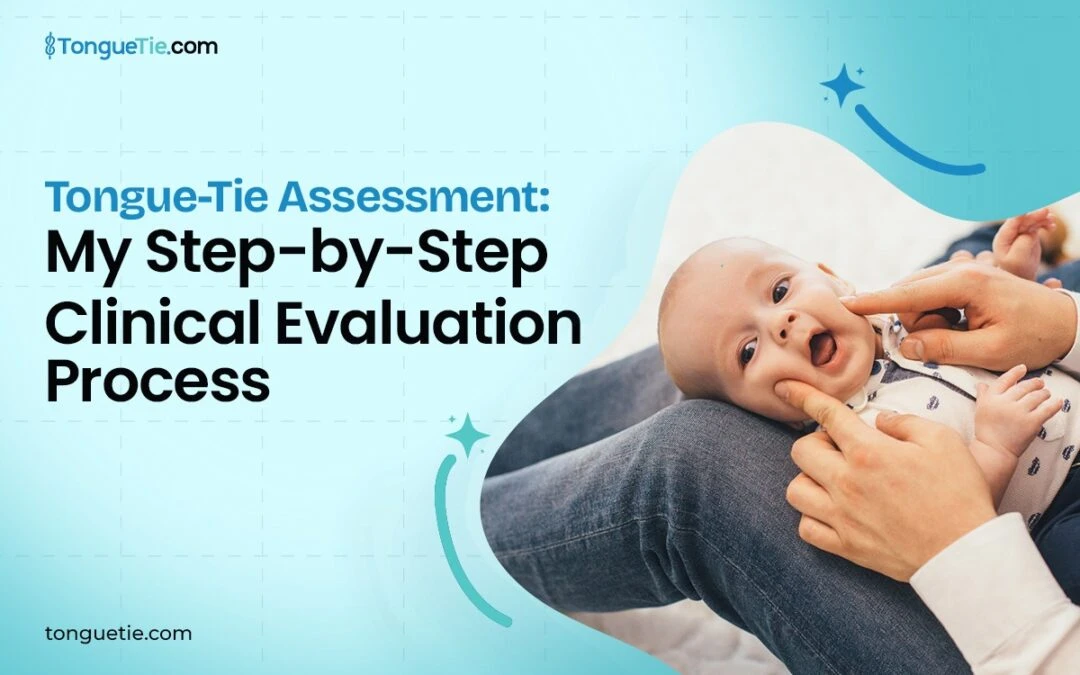
A large portion of any quality tongue-tie training course involves learning how to evaluate patients properly.
Evaluating Function Carefully
Most experienced providers will tell you this: diagnosis is often harder than the procedure itself.
A proper tongue-tie assessment involves much more than simply lifting the tongue for two seconds during an exam.
Providers learn how to evaluate:
- Tongue elevation
- Extension
- Lateral movement
- Suction
- Coordination
- Feeding function
- Compensation patterns
This is where experience and repetition become extremely important.
Many courses now use extensive video explanations so participants can repeatedly watch real feeding challenges, oral exams, and treatment outcomes. In our experience, seeing actual patient examples often helps providers far more than static textbook photos alone.
Learning About Breastfeeding Support
Because feeding challenges are so common in infants, many programs now include some level of breastfeeding-support training.
This does not mean every provider becomes a lactation consultant. But understanding basic feeding dynamics helps clinicians communicate better with families and collaborate more effectively with IBCLCs and therapists.
Topics may include:
- Latch mechanics
- Feeding observations
- Positioning concepts
- Milk transfer concerns
- Parent education
- Interdisciplinary referrals
This team approach has become one of the most important parts of modern tongue-tie care. In our practice, some of the best patient outcomes happen when providers work closely together rather than trying to manage everything alone.
For therapists, lactation consultants, feeding specialists, and bodyworkers who want focused education on oral function and collaborative care, the Tongue-Tied Academy LITE Program offers training specifically designed for non-surgical providers.
Tongue-Tied Academy and the LITE version do not cover positioning and feeding observations, as the dentist will not be performing those (it’s always best to stay in your lane!), but the basics of breastfeeding, research, and how to assess a breastfed baby are all in the course.
For Lactation Consultants, Therapists & Feeding Specialists
Learn collaborative skills for better tongue-tie and feeding outcomes
Learning Laser Tongue-Tie Release Techniques
For dentists and physicians, procedural education is often one of the most anticipated parts of a course.
Understanding Laser Technology
Many modern programs now include education on laser tongue-tie release because soft-tissue lasers have become increasingly common in clinical practice.
Providers typically learn about:
- Laser safety
- Tissue interaction
- Healing principles
- Laser settings
- Procedure setup
- Patient positioning
Some courses also provide broader laser education for tongue-tied patients and oral restrictions in general. These topics are where Tongue-Tied Academy and the Update Course really shine.
After treating thousands of tongue-tied patients, we have found that small details in positioning, visualization, tension, and laser technique can make a meaningful difference during procedures and healing.
Watching Real Procedures
Watching real procedures is usually far more helpful than simply reading about them.
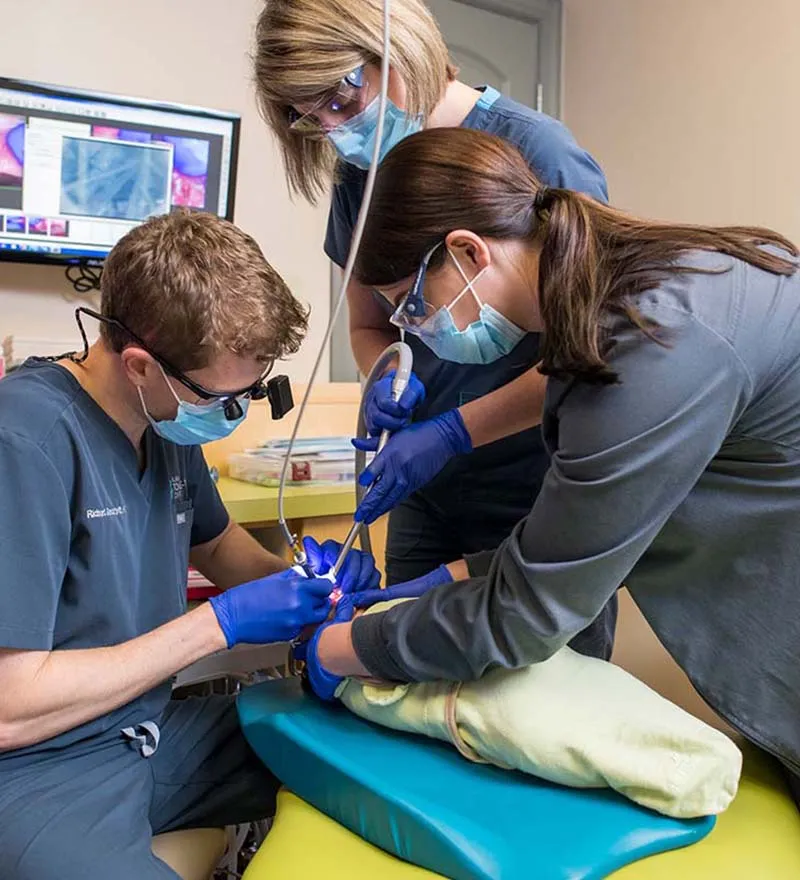
Strong courses often include surgical videos, live demonstrations, or step-by-step walkthroughs of releases on infants and children. Participants can observe:
- Examination technique
- Tissue tension
- Surgical approach
- Bleeding control
- Parent communication
- Postoperative instructions
That practical side of education helps bridge the gap between theory and real clinical care. This is why Tongue-Tied Academy includes dozens of clinical videos and even Virtual Shadowing so you feel like you’re right in the office with us.
Practicing Hands-On Skills
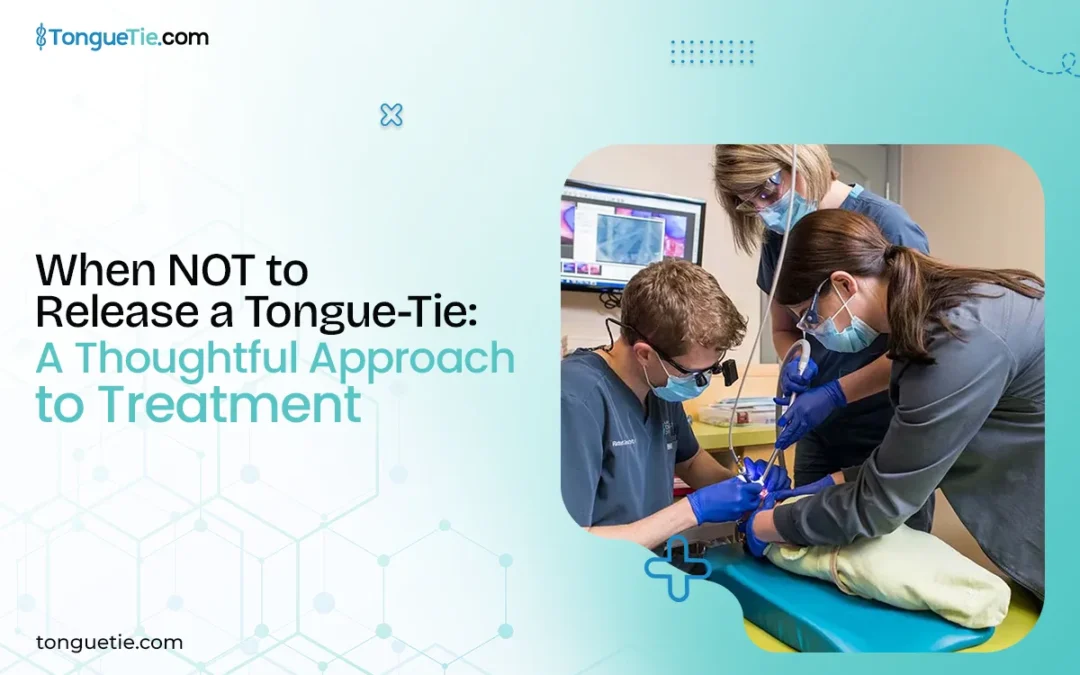
Some advanced courses also include hands-on workshops or live-patient training.
This type of frenectomy procedure training for dentists can help providers become more comfortable with laser handling, visualization, positioning, and workflow.
And honestly, most clinicians learn quickly that treating a moving infant in real life feels very different from watching a polished online video.
That is one reason hands-on education can be so valuable.
Providers looking for comprehensive procedural and diagnostic education can explore the Tongue-Tied Academy Course, which includes detailed lessons on assessment, laser procedures, patient management, and interdisciplinary collaboration.
Once you have completed the online curriculum, come see us for the Advanced Live Patient Course. Although you cannot treat patients, it’s as “hands-on” as you can get without a license in the state.
Understanding the Pros and Cons of Tongue-Tie Release
A thoughtful course should also discuss the difficult clinical questions — not just the procedure itself.
Discussing Benefits Realistically
Families deserve balanced information about the pros and cons of tongue-tie release.
Experienced providers understand that outcomes are not always identical from patient to patient. Some infants improve immediately. Others benefit from therapy, feeding support, bodywork, or time.
Courses often discuss:
- Potential feeding improvements
- Speech and oral-function considerations
- Healing variability
- Reattachment concerns
- Postoperative care
- Multidisciplinary support
Parents generally appreciate honest conversations much more than exaggerated promises.
Discussing When Treatment May Be Appropriate
One of the most common questions providers hear is: Is tongue-tie release necessary?
The answer is not always simple.
A comprehensive course should teach providers how to think critically about:
- Functional limitations
- Feeding challenges
- Growth concerns
- Oral-function issues
- Airway considerations
- Conservative treatment options
Good education helps providers avoid both overtreatment and undertreatment.
Learning What to Expect After Tongue-Tie Release
Postoperative care is another major topic in many courses.
Providers usually learn how to counsel families about:
- Healing appearance
- Feeding transitions
- Temporary soreness
- Follow-up visits
- Oral exercises or stretches
- Working with therapists after treatment
Setting expectations properly is important. Families often feel less anxious when they understand normal healing and recovery ahead of time.
Courses also frequently discuss how outcomes may improve when providers collaborate closely with feeding therapists, lactation consultants, speech therapists, and bodyworkers.
Continuing Education and Research-Based Learning
One weekend course alone rarely creates true expertise.
The strongest providers usually continue learning for years through mentorship, collaboration, case reviews, and continuing education.
Many programs now incorporate research-based lesson plans and published literature involving:
- Breastfeeding outcomes
- Speech development
- Laser safety
- Wound healing
- Airway considerations
- Functional improvement
At the same time, experienced clinicians also recognize that research in this field continues evolving. There is still much we are learning, which is one reason ongoing education and collaboration remain so important. We have an entire module in both the Original Course and the Update Course on the evidence base and research behind what we are doing.
FAQs
Q1. Who should take a tongue-tie training course?
Ans. Courses may be appropriate for dentists, physicians, lactation consultants, speech therapists, hygienists, occupational therapists, physical therapists, and other providers involved in oral-function care.
Q2. Do all courses teach laser procedures?
Ans. No. Some programs focus mainly on feeding and assessment, while others include extensive laser tongue-tie release education and procedural training.
Q3. Are hands-on courses worth it?
Ans. For providers planning to perform procedures clinically, hands-on learning is often extremely valuable because it builds confidence and improves practical skills. Check out our LIVE Course for more information.
Q4. Do courses discuss posterior tongue-ties?
Ans. Yes. Most comprehensive programs include a discussion of posterior tongue-ties and how posterior tongue-tie is treated clinically.
Final Thoughts
A high-quality tongue-tie training course should teach much more than how to perform a release. The best programs combine anatomy, function, assessment, feeding education, procedural technique, collaboration, and real-world clinical decision-making.
Most importantly, good education helps providers think critically and care for patients more confidently.
If you are interested in comprehensive education for dentists and physicians, the Tongue-Tied Academy Course provides in-depth training in tongue-tie assessment, laser procedures, and interdisciplinary care. Therapists, lactation consultants, and allied providers may also benefit from the Tongue-Tied Academy LITE Program, which focuses on oral function, feeding support, and collaborative care for tongue-tied patients and families.
As awareness of tongue-ties continues growing, thoughtful, evidence-based education is more important than ever.
For Dentists, Physicians & Feeding Specialists