Persistent symptoms may result from incomplete diagnosis, reattachment, body tension, oral motor dysfunction, or inadequate aftercare. The best outcomes come from accurate evaluation, proper treatment, effective follow-up, and a team-based approach.
One of the more difficult conversations I have with parents begins with a sentence I’ve heard many times over the years: “We already had our baby’s tongue-tie released, but nothing changed.”
Sometimes breastfeeding is still painful. Sometimes the baby still clicks throughout every feeding or continues swallowing excessive amounts of air. Other parents tell me things improved for a few days before gradually returning to where they started. By the time they arrive in my office, they’ve often invested a tremendous amount of time, emotion, and hope into the first procedure. They’ve rearranged work schedules, traveled long distances, worried about their child, and in many cases paid out of pocket for treatment. It’s understandable that they’re discouraged.
When that happens, people naturally begin asking whether tongue-tie treatment really works. After treating thousands of patients over more than a decade, I don’t think that’s usually the right question. The better question is, why didn’t this particular patient improve the way everyone hoped? Those are two very different questions, and they lead us down two very different paths.
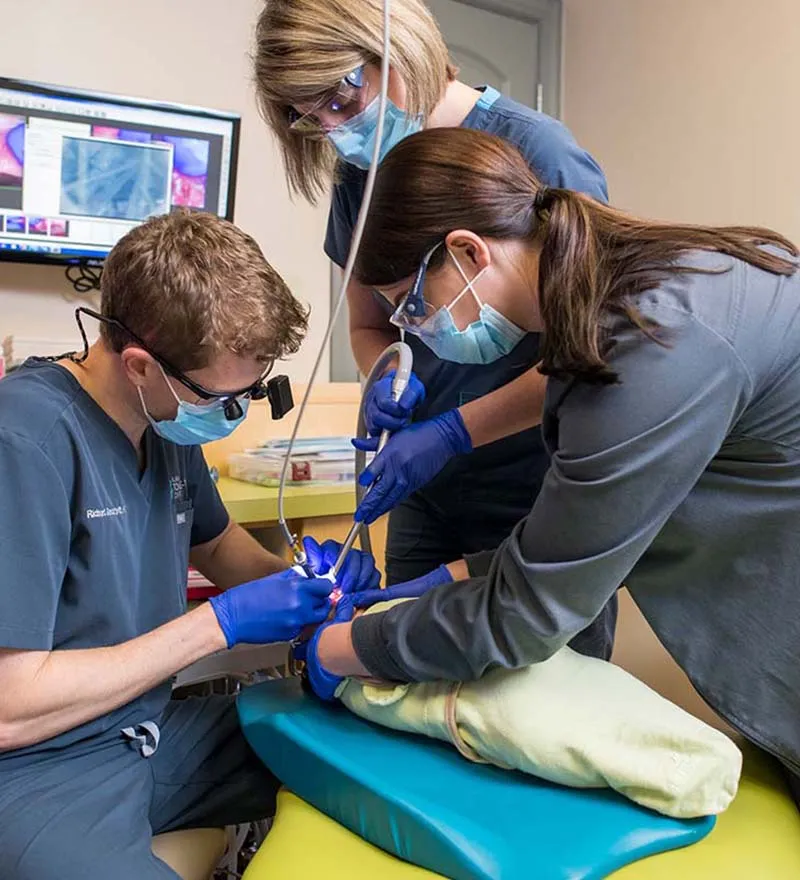
One of the biggest themes you’ll find throughout my writing is that I don’t believe excellent outcomes are created by a laser alone. In fact, I don’t even think the procedure is the most important part of successful tongue-tie treatment. Great outcomes begin long before anyone enters the treatment room. They start with careful patient selection, a thorough history, a comprehensive functional examination, and an accurate diagnosis. If treatment is appropriate, then the release should be complete and thoughtfully performed. Healing doesn’t end there, however. Appropriate aftercare, follow-up, and collaboration with the right healthcare professionals are often just as important as the procedure itself.
That’s one of the reasons I sometimes hesitate when someone asks me whether a previous tongue-tie release “failed.” Failure can mean many different things. Did the original diagnosis miss another contributing factor? Was the tongue still restricted after healing (insufficient release or inadequate stretching)? Did the baby improve, but not as quickly as the family expected? Was there significant body tension that continued to interfere with feeding? (This one is super common!) Those situations all require different solutions, and I’ve learned that it’s rarely helpful to assume the answer before understanding the entire story.
When families come to see me after a previous procedure, I don’t begin by examining the tongue. I begin exactly the same way I do with every other patient: I listen. I want to know what feeding looked like before treatment, what changed afterward, and what concerns remain today. Parents often provide remarkably important clues without realizing it. They’ll describe better milk transfer but persistent nipple pain, or less clicking but continued bottle refusal. Sometimes they’ll tell me they noticed clear improvement initially before healing seemed to change things. Other times, they’ll say they never saw any improvement at all. Each of those histories points me in a different direction.
Over the years, I’ve become convinced that history is one of the most underappreciated parts of a tongue-tie evaluation. We spend a great deal of time talking about anatomy, laser settings, and surgical technique, but the parents’ story often tells us where to begin looking. That’s true whether it’s the first evaluation or whether the child has already undergone treatment elsewhere.
This philosophy is one of the reasons I created Tongue-Tied Academy. Most medical and dental schools provide little (or no) education on tongue-ties, and even less on functional infant feeding assessments. As a result, many providers graduate with excellent clinical skills but very little practical experience evaluating tongue function. My goal has never been to teach providers how to perform more laser procedures. My goal is to help them become better clinicians by teaching the entire process – from patient selection and diagnosis to treatment, aftercare, follow-up, and multidisciplinary care. If we improve those decisions, I believe the procedures naturally become more successful. You can learn more about Tongue-Tied Academy at TongueTie.com/Course.
Parents occasionally find these provider articles while searching for answers, and if that’s what brought you here, I hope one message stands out: a disappointing outcome doesn’t necessarily mean your child can’t improve. Sometimes it simply means another piece of the puzzle hasn’t been identified yet. If you’ve already been through treatment but still have concerns, you’re welcome to send us a message or give our team a call at 205-419-4333. I’d be happy to perform a comprehensive evaluation and help determine why your child isn’t progressing the way everyone expected.
Still Looking for Answers?
A Disappointing Outcome Doesn’t Mean Your Child Can’t Improve
Looking Beyond the Procedure
One of the things I’ve learned over the years is that it’s very easy to focus on the procedure itself because it’s the most visible part of treatment. Families remember the day of the release. Providers naturally spend time discussing surgical technique, post-op care, and healing. Those things are certainly important, but I think they sometimes distract us from a much bigger question.
Was this patient set up for success before the procedure ever began?
I’ve become convinced that the best outcomes are rarely the result of doing one thing exceptionally well. Instead, they come from doing a number of things consistently well. When I look back at the patients who have done the best over the years, I don’t just remember a successful laser release. I remember a careful evaluation, thoughtful case selection, a family that understood what to expect, good aftercare, appropriate follow-up, and, often, collaboration with other healthcare providers (ideally before the release). Those pieces work together, and it’s difficult to separate one from the other. This is also an important lesson emphasized in a comprehensive laser frenectomy course, where clinicians learn that long-term success depends on the entire treatment process, not just the procedure itself.
That’s one reason I sometimes tell providers that the laser isn’t the treatment. It’s one part of the treatment.
Reattachment Isn’t the Only Reason Patients Don’t Improve
One of the first things people ask when a child isn’t improving is whether the tongue “reattached.”
Sometimes that’s the answer. Often it isn’t.
Reattachment after tongue-tie release certainly occurs, and it’s something every provider who treats tongue-ties needs to understand and monitor. At the same time, I’ve evaluated many patients whose tongues healed well but who continued struggling because another piece of the puzzle hadn’t been addressed. In other cases, I’ve seen children with a small amount of reattachment who still made tremendous functional progress because the original restriction had been significantly improved.
Each child has a “magic number” or amount of restriction that will affect them and cause symptoms if it’s tighter than that number. Some kids have symptoms even with a barely-there 12% restriction; others might have symptoms with a 28% restriction, and some may function well even until a 63% restriction! We don’t know how tight a tongue will affect each child, so we try to provide as much mobility as possible and have the tongue heal with minimal reattachment, so we can get past that magic number in tongue elevation.
Healing is only one part of the evaluation. I want to understand how the child is feeding, whether symptoms have changed, what the parents are noticing at home, and how the tongue is functioning now compared to before treatment. Looking at the surgical site alone rarely tells the entire story.
Great Outcomes Begin Before the Laser Is Ever Turned On
This may be the point I feel most strongly about.
People occasionally ask me why one provider consistently reports excellent outcomes while another struggles with revisions or disappointed families. There are certainly many possible explanations, but I don’t think the answer usually starts with the laser.
I think it starts with the evaluation.
When the right patient is selected, the history is carefully reviewed, the examination is thorough, the diagnosis is accurate, and treatment is recommended for the right reasons, the procedure begins from a position of strength. Add a complete release, appropriate aftercare, careful follow-up, and a multidisciplinary team when needed, and you’ve dramatically increased the likelihood of a successful outcome.
In my experience, that’s why the overwhelming majority of appropriately selected patients improve. It isn’t because the procedure itself is magical. It’s because the entire treatment process has been designed to give that patient the best opportunity to succeed.
Unfortunately, if one or more of those steps is skipped, outcomes become much less predictable. A beautifully performed release can’t compensate for an incorrect diagnosis, just as a correct diagnosis can’t overcome poor follow-up or inadequate aftercare. Every step matters.
This is exactly why Tongue-Tied Academy spends so much time on evaluation and clinical reasoning. Most medical and dental schools provide little (or no) education on tongue-ties, and providers are often left trying to piece together information from lectures, journal articles, and personal experience. My goal was to build the course I wish had been available when I first started treating tongue-ties. Yes, we cover laser technique in detail, but we spend just as much time discussing patient selection, functional assessment, aftercare, follow-up, and multidisciplinary care because I believe that’s where excellent outcomes are built. If you’d like to learn more, I’d encourage you to explore Tongue-Tied Academy or the LITE version for therapists.
Parents who find this article are often looking for reassurance after a disappointing experience. If that’s you, don’t assume your child’s tongue-tie story is over or can’t be fixed. I’ve evaluated many children who improved significantly after identifying another contributing factor or developing a more comprehensive treatment plan. If you’re still searching for answers, you’re welcome to send us a message or call 205-419-4333. I’d be happy to help determine why your child hasn’t improved the way everyone hoped.
Never Stop Asking Why
One of the reasons I continue to enjoy treating tongue-ties is that every patient teaches me something. Even after thousands of cases, I still ask myself the same question whenever someone isn’t improving:
Why?
Sometimes the answer is straightforward. Sometimes it isn’t.
I’ve learned not to assume that every persistent symptom means the release was incomplete, just as I don’t assume every release that appears complete will automatically produce the outcome everyone hopes for. Instead, I go back through the process. Was the original diagnosis correct? Is the tongue functioning differently now than it did before treatment? Has healing progressed as expected? Is there body tension, oral motor dysfunction, or another factor that still needs to be addressed?
Approaching each patient with curiosity instead of assumptions has made me a better clinician.
Success Is a Team Effort
The longer I’ve been treating tongue-ties, the more I’ve appreciated the value of working with other healthcare professionals. Lactation consultants, speech-language pathologists, occupational therapists, physical therapists, chiropractors experienced with infants, pediatricians, ENTs, and many others all bring unique perspectives. No single provider has all the answers, and I think our patients benefit tremendously when we communicate and work together.
Not every child needs every member of that team. However, when additional support is appropriate, I believe collaboration often makes the difference between a good result and an excellent one.
The Goal Isn’t More Procedures
One of the reasons I started teaching was to help providers avoid the mistakes I made early in my career. I’d rather you not repeat my mistakes or have to learn by trial and error! My goal has never been to convince more clinicians to perform tongue-tie releases. My goal is to help providers make better decisions.
Sometimes that means recommending treatment. Sometimes it means recommending therapy first. Sometimes it means reassuring a family that a procedure isn’t needed. When we consistently make the right decision for the right patient, outcomes naturally improve.
If you’re a dentist or physician looking for practical, experience-based education, I’d love to have you join Tongue-Tied Academy. We spend as much time discussing patient selection, diagnosis, functional assessment, aftercare, and multidisciplinary care as we do the procedure itself because I believe those are the foundations of excellent outcomes. We donate all the proceeds of the course to worthy local and global charities. This article is not just to sell another course.
If you’re an IBCLC, speech-language pathologist, occupational therapist, physical therapist, chiropractor, or another therapist who works with these patients, Tongue-Tied Academy LITE was designed specifically for your role on the treatment team.
If you’re a parent reading this article because your child hasn’t improved the way you hoped, don’t lose hope. A disappointing result doesn’t always mean treatment was the wrong decision, nor does it mean your child can’t improve. Sometimes it simply means another piece of the puzzle still needs to be identified. If you’d like a comprehensive evaluation, you’re always welcome to send us a message or call 205-419-4333.
Continue Reading
You may also enjoy these articles:
-
Tongue-Tie Assessment: My Step-by-Step Clinical Evaluation Process
-
Posterior Tongue-Tie: Why It’s Frequently Missed During Infant Exams
Looking back over the years, I don’t think successful tongue-tie treatment can be reduced to one procedure or one technique. It’s the result of making thoughtful decisions at every step of the process. When we select the right patients, listen carefully, evaluate function, perform treatment well, provide appropriate aftercare, and work together as a team, I’ve found that the overwhelming majority of patients experience meaningful improvement. That’s the standard I continue to strive for in my own practice, and it’s the philosophy I hope to pass along to every provider I have the privilege of teaching. Thanks for reading!
Not Seeing the Results You Expected?