Most dentists remember performing their first crown prep or first extraction after dental school. The procedure may have been technically successful, but there was a noticeable difference between the first case and the hundredth.
Frenectomies are no different.
Early in my career, I thought becoming better at tongue-tie treatment meant becoming faster or more technically efficient. While those things certainly matter, I eventually realized that the biggest improvements in patient outcomes came from something else entirely: continuing education.
The providers who consistently achieve excellent results are rarely those who simply perform the most procedures. They are the ones who continually refine how they evaluate patients, communicate with families, perform surgery, and manage care afterward. Attending multiple courses, reading books, seeking out mentors, and, of course, patient care and follow-up visits (!) are all critical to continued success and learning.
That is why I believe frenectomy continuing education is one of the best investments a provider can make… not only for their practice, but for their patients.
Experience Changes the Questions You Ask
One of the first things I notice when teaching newer providers is how their thinking evolves.
Early on, the question is usually:
“Is there a tongue-tie?”
With experience, the questions become much more thoughtful.
-
Why is this patient here?
-
What functional problem are they hoping to solve?
-
Does the restriction explain the symptoms?
-
Is treatment likely to improve function?
-
Are there other factors contributing to the patient’s challenges?
Those questions often have a much greater impact on outcomes than the procedure itself.
Quality continuing education courses for dentists should help providers develop clinical judgment – not simply teach them how to complete a procedure.
Small Changes Can Make a Big Difference
One of the most rewarding parts of teaching is watching experienced clinicians make small adjustments that dramatically improve consistency.
Sometimes it involves patient positioning.
Sometimes it’s how tension is applied before a release.
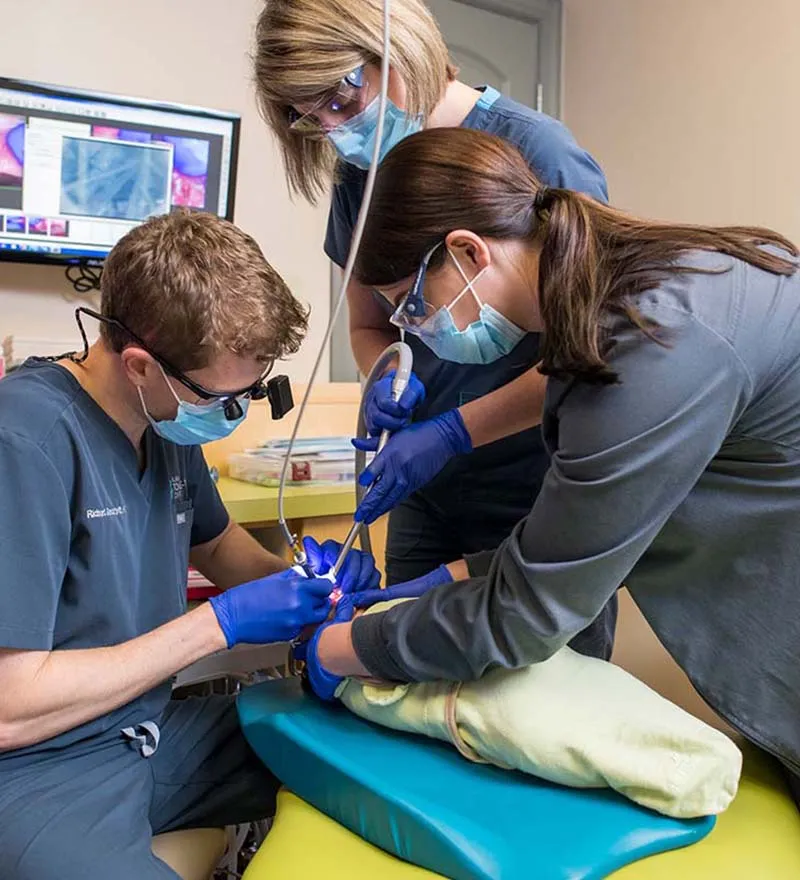
Other times it’s improving visibility, adjusting laser settings, or simply making better use of an assistant during the procedure.
None of these changes seem dramatic on their own.
Together, however, they often make procedures smoother, more efficient, and more predictable.
That is one reason I enjoy teaching laser frenectomy techniques. Small refinements can make a meaningful difference over the course of hundreds or thousands of procedures.
Better Communication Creates Better Outcomes
One lesson I learned fairly early was that surgery is often the easiest part of the appointment.
The more challenging – and often more important – part is communication.
Parents want to understand:
-
Why treatment is recommended
-
What a frenectomy procedure actually involves
-
What healing looks like
-
What results are realistic
-
What to expect during recovery
Helping families feel informed and confident is every bit as important as performing excellent surgery.
That confidence grows naturally as providers continue learning and gain experience.
Also Read: The Complete Guide to Professional Tongue-Tie Training in 2026
Learning Beyond the Operatory
Some of the most valuable things I have learned over the years did not come from another dentist.
They came from listening to:
-
Lactation consultants
-
Speech-language pathologists
-
Occupational therapists
-
Physical therapists
-
Chiropractors
-
Myofunctional therapists
-
Pediatricians
-
ENTs
Each discipline sees patients through a slightly different lens.
Understanding those perspectives has changed the way I evaluate patients, explain treatment, and think about long-term outcomes.
The more we learn from one another, the better care we can provide.
The Procedure Is Not the Finish Line
One area that deserves much more attention is postoperative care.
A technically excellent laser frenectomy is only one part of a successful outcome.
Providers should also become confident discussing:
-
Feeding immediately after treatment
-
Healing expectations
-
Frenectomy after care baby instructions
-
Follow-up visits
-
Collaboration with therapists when appropriate
Parents often remember these conversations just as clearly as they remember the procedure itself.
Good follow-up builds confidence, improves compliance, and helps families feel supported throughout the healing process.
I Still Learn Every Year
One question I occasionally hear is, “After treating thousands of patients, do you still attend continuing education?”
Absolutely. Several times a year.
This field continues to evolve.
New research is published. Different providers bring new perspectives. Our understanding of oral function, feeding, airway development, and interdisciplinary care continues to grow.
One of the reasons I enjoy teaching is that it also pushes me to keep learning.
The best clinicians I know are lifelong students.
Read Also: The Real Story of the Tongue-Tie Clinical Report from the American Academy of Pediatrics
Choosing the Right Frenectomy CE Course
Not every frenectomy CE course is the same.
Some courses focus primarily on surgical technique. Others emphasize diagnosis, laser settings, or postoperative management.
In my opinion, the strongest education brings all of those pieces together.
Providers should leave a course with a better understanding of:
-
Patient selection
-
Functional assessment
-
Soft tissue management
-
Laser principles
-
Surgical decision-making
-
Family communication
-
Long-term patient care
Technical skill is important, but sound clinical judgment is what truly improves outcomes.
Education Designed for Your Role
Every member of the treatment team has different educational needs.
The Tongue-Tied Academy Course was created for dentists and physicians who want comprehensive education in diagnosis, laser procedures, patient management, and interdisciplinary care. Rather than focusing only on how to perform a release, the course emphasizes the clinical decision-making that surrounds every case.
For speech-language pathologists, occupational therapists, physical therapists, lactation consultants, hygienists, and other non-surgical providers, the Tongue-Tied Academy LITE Program focuses on oral function, feeding, assessment, and collaboration without procedural training.
Both courses are built around the same philosophy: better education leads to better patient care.
Final Thoughts
Looking back, I do not think the biggest improvements in my practice came from simply performing more frenectomies. They came from continually refining how I evaluated patients, learned from other disciplines, communicated with families, and thought through each clinical decision.
That is ultimately what quality frenectomy continuing education should provide.
If your goal is not simply to perform a procedure – but to become a better clinician – I encourage you to explore the Tongue-Tied Academy Course or, if you’re a therapist or allied healthcare professional, the Tongue-Tied Academy LITE Program. My hope is that the lessons I’ve learned over thousands of patient encounters can help shorten your learning curve and ultimately improve the care you provide to your own patients.
Frequently Asked Questions
01. What is a frenectomy?
A frenectomy is a procedure that releases restrictive tissue beneath the tongue or upper lip when that restriction is contributing to functional concerns such as feeding or oral mobility.
02. Why is frenectomy continuing education important?
Continuing education helps providers strengthen diagnostic skills, refine surgical technique, improve patient communication, and stay current with evolving research and clinical practices.
03. What should I look for in a frenectomy CE course?
Look for education that covers far more than the procedure itself, including assessment, soft tissue management, laser techniques, postoperative care, and interdisciplinary collaboration.
04. Which Tongue-Tied Academy course is right for me?
The Tongue-Tied Academy Course is designed for dentists and physicians performing procedures, while the Tongue-Tied Academy LITE Program is ideal for therapists, lactation consultants, hygienists, and other allied healthcare professionals.
Ready to Take the Next Step?