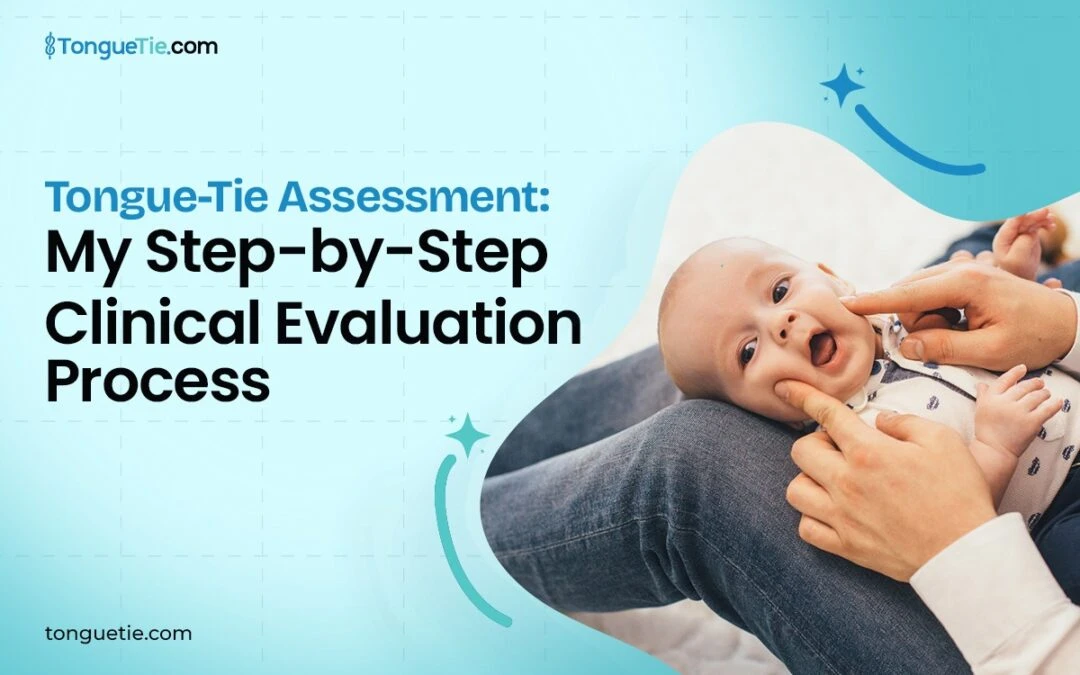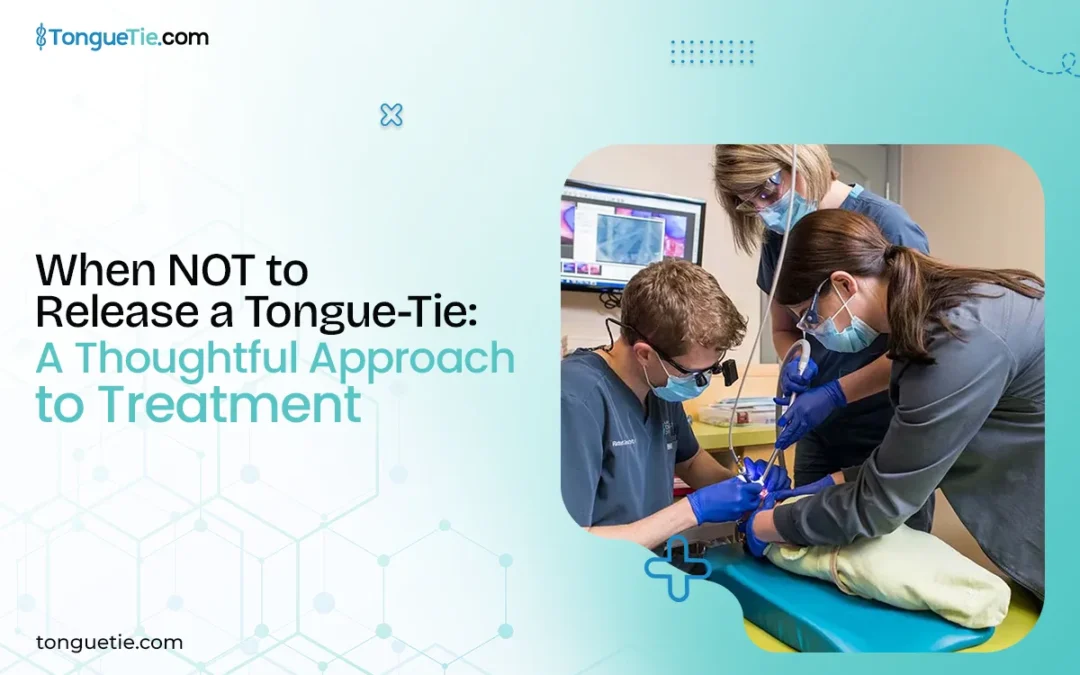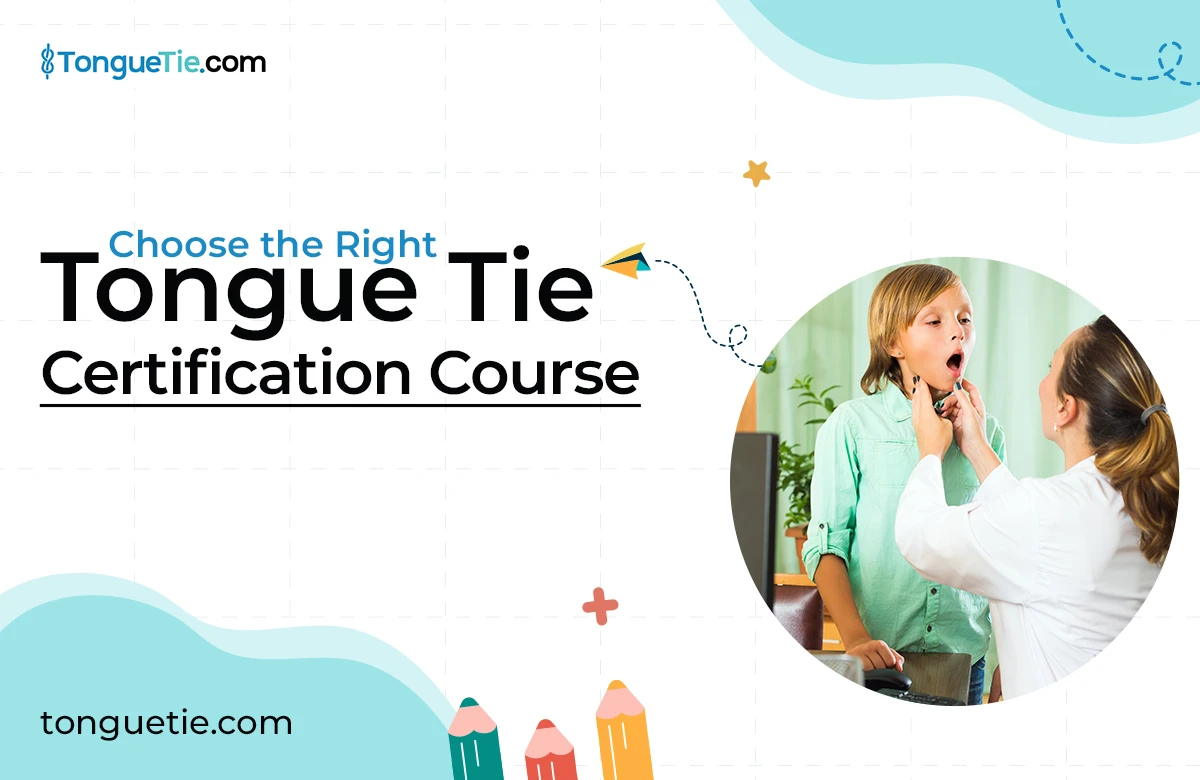
Tongue-tie or ankyloglossia is a disorder in which the lingual frenulum (a piece of tissue underneath the tongue) limits the movement of the tongue. This disorder may impair breastfeeding, oral functioning, speech development, and quality of life for children and their families. With the continued rise in awareness of tongue-tie, medical practitioners are increasingly seeking additional courses to diagnose and treat the condition since it is not taught in school or training programs.
For dentists, pediatricians, ENTs, lactation consultants, and speech therapists, among other medical practitioners, completing a tongue-tie certification course is a significant step toward acquiring the competence required to handle tongue-tie cases efficiently. Nevertheless, since there are a plethora of programs, it is hard to decide which is the appropriate program.
To help you invest in a course that will empower your professional growth and improve your ability to treat patients, we will examine the key factors to consider when choosing the most effective training program in this guide.
Know Your Career Ambitions
It is important to clearly understand your individual objectives before choosing a training program. Various tongue-tie training courses emphasize different areas of treatment and care. Some courses focus on diagnosis and assessment, while others provide practical surgical training. Some are geared for dentists, or specifically pediatric dentists, and others are for speech therapists or lactation consultants.
For example:
Dentists, oral surgeons, ENTs, will find it more favorable to be enrolled in programs that involve frenectomy procedures.
A laser frenectomy certification for pediatricians that emphasizes safety and minimally invasive treatment would benefit pediatricians.
Lactation consultants will want to focus on training about breastfeeding difficulties, family dynamics, when to refer, differential diagnosis, and how to coordinate care due to tongue-tie issues.
Knowing your professional needs will help you select the most appropriate tongue-tie training program for your clinical practice.
Overview of the Course Curriculum
A training course on tongue-tie and lip-tie ought to include a well-designed, evidence-based curriculum. Proper tongue-tie treatment requires both the diagnosis and the skills required for the procedure, so the program must address various aspects of care.
The elements of a comprehensive curriculum are:
- Oral structures and anatomy of the tongue.
- Diagnosis and grouping of tongue-tie.
- Effect of tongue-tie on speech, feeding, breathing, and breastfeeding.
- Methods of clinical evaluation.
- Safe and effective treatment options
- Therapy involving frenectomy procedures.
- Follow-up care and patient management.
There are courses that also include modules on post-treatment rehabilitation, which are particularly useful. For example, training in post-tongue-tie procedures (also known as oral exercises, wound management, or therapy) helps ensure that healing and tongue mobility improve after surgery.
Take into account the teacher’s experience
One of the most important factors when choosing a course is the quality of the instructor. Studying under experienced professionals will ensure that the knowledge passed on is evidence-based, practical, and relevant to clinical practice.
For example, many medical and dental professionals recognize Richard Baxter’s tongue-tie course as authoritative in this field because it is delivered by an instructor with a deep background in tongue-tie treatment and research. Tongue-Tied Academy is not only one of the most-enrolled courses on tongue-tie but also among the Top 10 courses on Thinkific, one of the largest online course platforms in the world.
Look at the training opportunities at hand
Online learning is convenient, but practical training is required to learn the processes involved in procedures such as frenectomy. If you intend to perform surgical procedures, seek courses that include clinical demonstrations or practical classes.
As an example, a frenectomy CE course can comprise:
- Live demonstrations of patients.
- Procedural training step-by-step.
- Surgical or laser frenectomy.
- Clinical guidelines and safety measures.
- Case studies to demonstrate different ways to manage patients
Evaluate Certification and Accreditation
Another factor to consider is that the course must offer a recognized certification. An acceptable tongue-tie certification program must include qualifications that demonstrate your professional training.
In assessing certification programs, look at:
- Continuing education (CE) credit.
Tongue-Tied Academy gives out 25 hours of credit upon completion. - Recognized medical or dental accreditation.
Tongue-Tied Academy provides ADA-approved CE credits that can be used toward licensure.
Find Post-Procedure Training Components
A frenectomy is not the final operation in the treatment of tongue-tie. Follow-up care and therapy are necessary to heal and improve function and see results for families.
Other courses with post-tongue-tie procedure wound training or oral rehabilitation strategies are also beneficial.
Compare Flexibility and Learning Formats
Medical and dental professionals are usually busy, and it is therefore necessary to select the appropriate mode of learning. Some classes involve only online classes, and others involve a combination of online and physical classes. Some are hours-long Zoom sessions, and others are broken into bite-sized pieces. Tongue-Tied Academy is online (with a Live component if desired) and has lessons and modules broken into 10-20 minute segments for easy review.
Ordinary course structures consist of:
- Self-paced online learning
- Live virtual training lessons.
- Face-to-face clinical workshops.
- Theory and practical programs: Hybrid theory/practice.
Select a program that suits you and does not interfere with your schedule, and yet gives you the training you require.
View Testimonials and Reviews
Review feedback from people who took the same course before enrolling. Testimonials can provide helpful information about the course’s quality, the instructor’s level of expertise, and the training’s usefulness in the field.
Search reviews that include:
- Clinical outcomes.
- Well-defined and organized learning modules.
- Mentorship or assistance is helpful.
- Self-esteem acquired during the program.
Find the right course for you
Take the next step in your professional journey.
Positive reviews usually indicate that the tongue-tie certification course has enabled professionals to improve themselves and better treat patients.
Conclusion
The selection of an appropriate tongue-tie certification course is a worthwhile investment for healthcare professionals seeking to specialize in diagnosing and treating tongue-tie conditions. The perfect course ought to have a well-rounded curriculum, qualified teachers, practical training, and certification.
Regardless of whether you are taking a tongue-tie training course, a frenectomy CE course, or a laser frenectomy certification course for pediatricians, dentists, or ENTs, a program that integrates science and clinical practice will make you gain the confidence to offer effective patient care and see changed lives.
Besides professional training, the availability of the correct tools and resources is another factor that contributes to the success of the tongue-tie treatment and recovery.
Check out our tongue-tie courses and how we can help professionals with special tools and solutions to support them in tongue-tie procedures and post-treatment care, achieving greater results with their patients.

Find the right course for you
Take the next step in your professional journey.
FAQs
Q1. Who is to attend a tongue-tie certification course?
A tongue-tie certification course can suit any healthcare practitioner, including dentists, pediatricians, ENTs, lactation consultants, speech therapists, oral surgeons, and other clinicians who deal with infant feeding or oral health care.
Q2. What will I get to know in a tongue-tie training course?
In most tongue-tie training programs, anatomy, diagnosis, treatment options, including frenectomy surgery, patient assessment, and post-procedure details such as oral exercises and methods to rehabilitate the area are discussed. Tongue-Tied Academy also includes a business module, case studies, virtual shadowing, and team training for assistants and a coordinator.
Also Read: 3 Ways to Tell If A Child Has a Lip-Tie